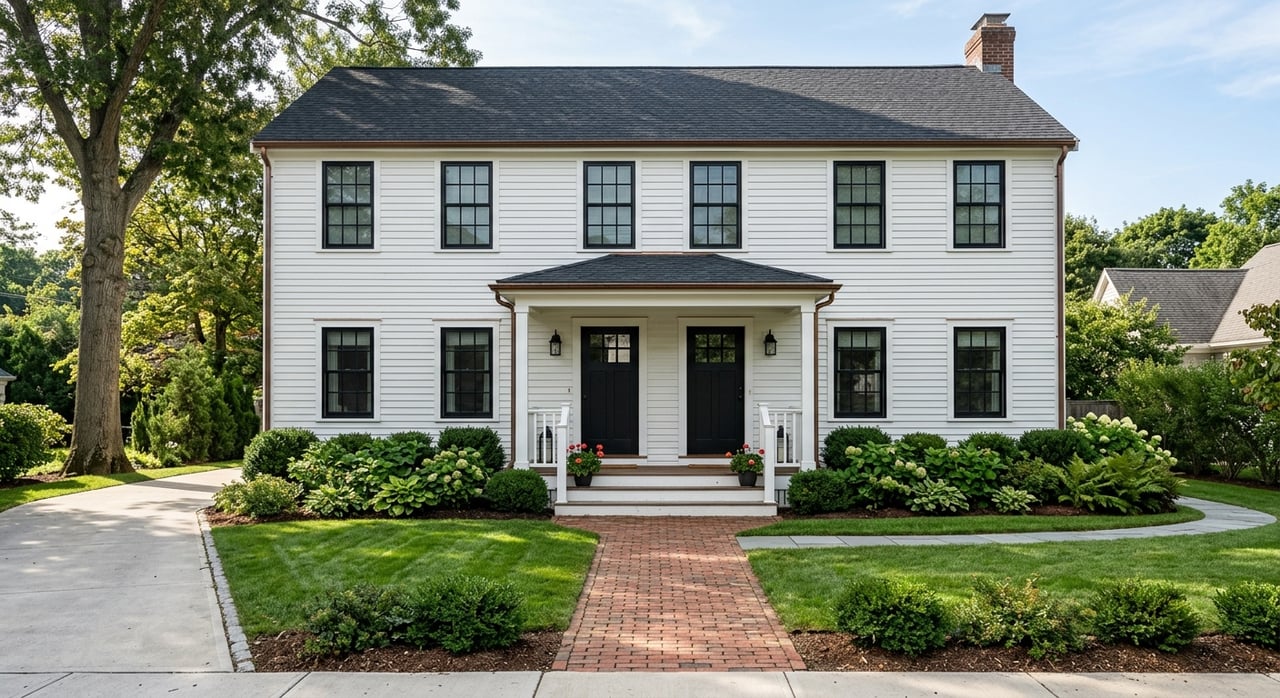
Owners of Brookline's classic two- and three-family houses often assume that turning rental units into condos means the same zoning gauntlet a developer faces on a bigger building. It doesn't. Brookline has required a special permit for condo conversions since 1981, but that rule only applies once a building holds four or more units. Most of the town's multi-family stock never gets near that line. A separate rule does apply, though, no matter how small the building is, and it moves on a clock measured in hours, not months.
That distinction matters more than it sounds. It changes which owners need a lawyer for a zoning hearing and which owners just need to get their paperwork in order before closing.
The Permit That Doesn't Apply to You
Brookline's condo conversion special permit dates back to a 1981 town meeting vote, adopted separately from the rent control law that governed the same era. The rule prohibits converting any apartment building or multifamily dwelling with four or more units into a condominium without first securing a special permit from the town. In 1986 Brookline layered on two more bylaws covering tenant notice and protections for buildings that fell outside its rent control scheme, and in 2006 the town revised its approach again, aligning tenant protections with the statewide condo law rather than maintaining a separate, stricter local standard for notice periods.
What survived every revision is the four-unit threshold. If you own a two-family or a three-family, this permit process was never written with your building in mind. According to Brookline's FY2026 assessors' classification hearing, the town's 2-and-3-family parcel class includes 1,112 properties, a fraction of the 10,588 condo parcels and 4,579 single-family parcels on the rolls. Most of that multi-family inventory sits comfortably under the four-unit line where the special permit and its hearing requirements simply don't apply.
That doesn't mean converting a two-family is paperwork-free. It means the friction shows up somewhere else.
The Clock That Does Apply
Once you record a master deed under Massachusetts General Laws Chapter 183A, whether you're converting two units or twenty, Brookline requires you to file a copy with the town's Building Department within 48 hours. That filing triggers an inspection, carried out through the town's Health Department, to confirm the building complies with applicable state and local codes before any unit can be sold individually. This is a stricter local layer than the standard the statewide condo law imposes elsewhere in Massachusetts, and it's easy to miss if you're working from generic condo conversion advice rather than Brookline's own rules.
In practice, this means the sequence for even a small conversion looks like this:
- Record the master deed with the Registry of Deeds.
- File a copy with Brookline's Building Department within 48 hours of that recording.
- Wait for a Health Department inspection confirming code compliance.
- Only then can individual units be conveyed as separate condominiums.
Miss that 48-hour window or misunderstand which department needs the copy, and you're not facing a fine so much as a stalled closing timeline while the town catches up. For an owner trying to time a sale around a buyer's mortgage commitment, that's the detail worth confirming with the Building Department before you set a closing date, not after.
Why the Building on Beacon Street Went From Eighteen Apartments to Four Condos
The four-unit threshold that spares most two- and three-family owners from a special permit is the same threshold that shapes how larger projects get designed in the first place. A vacant office building at 1093 Beacon Street, in Brookline's Longwood neighborhood, makes the mechanism visible.
The building's prior owners, Mark Blotner and Lloyd Rosenthal, bought the property in 2005 for $2.5 million and originally planned roughly 18 apartments, mostly studios and one-bedrooms. developer Matt Ramey of Concept Properties bought it in 2024 for $6.2 million, and the plan changed. Instead of 18 rental units, the Zoning Board of Appeals held a public hearing on December 18, 2025 for a very different project: four floor-through luxury condominiums, each spanning a full floor with four bedrooms, four bathrooms, private elevator access, and between 1,800 and 2,600 square feet.
| Original plan (2005-2024) | Revised plan (approved 2025) | |
|---|---|---|
| Unit count | About 18 apartments | 4 condominiums |
| Unit type | Studios, one-bedrooms | 4-bed, 4-bath floor-throughs |
| Unit size | Not specified | 1,800 to 2,600 sq ft each |
| Tenure | Rental | For-sale condo |
Brookline's affordable housing bylaw requires 15 percent of units in a conversion project of four or more units to be affordable. At 18 units, that math produces something close to three affordable apartments. At four units, 15 percent works out to 0.6 units, typically satisfied through a cash contribution rather than an actual affordable unit on site. Designing to land at exactly four units doesn't just simplify construction. It changes which affordable housing obligation applies.
For an owner of an existing two- or three-family, this case doesn't apply directly since you're already well under the threshold. What it shows is how much weight that four-unit line carries in Brookline's zoning framework, and why any plan to add a unit, combine parcels, or expand a building should start with a clear look at whether that addition pushes you across it.
The Spread That's Driving the Question
Part of why more Brookline owners are asking about conversion in the first place comes down to price per square foot. In 2025, average multi-family sale prices in Brookline ran about $2.9 million, working out to roughly $660 per square foot. Condominiums sold for an average price just over $1.2 million that same year, but at roughly $809 per square foot, a meaningfully higher rate than the multi-family figure.
That spread is the arithmetic behind why converting a rental building into individually owned units can outperform selling the building whole. A three-family that trades as a single asset at $660 a foot competes with every other multi-family listing on the market. The same square footage sold as three separate condos competes instead against Brookline's condo market, where per-square-foot pricing runs noticeably higher. The gap doesn't guarantee a profit once you account for permit timelines, legal fees, and construction costs tied to bringing each unit up to sale-ready condition, but it explains why the math gets discussed at all.
It also explains why entry pricing for Brookline multi-family properties stays high even as rental cash flow alone doesn't always justify the purchase price. Owners who bought years ago, before the spread widened this much, are often the ones now weighing whether their building is worth more as three condos than as one rental property.
What to Check Before You Call an Architect
Before assuming your building can go this route, a few local details are worth confirming early, since they shape both timeline and cost:
- Your zoning district. Brookline's zoning bylaw separates SC districts (single-family and converted two-family), T districts (two-family and attached single-family), F districts (three-family), and M districts (apartment-scale multifamily). What's allowed as-of-right in one district may require a variance in another.
- Historic district status. Brookline maintains nine local historic districts, and its demolition-delay bylaw can hold demolition of a historically significant building for up to 18 months. If your property sits inside one of these districts, any exterior work tied to a conversion runs through the Preservation Commission first.
- Lead paint compliance. Massachusetts requires lead-law notification for pre-1978 rental housing, and much of Brookline's multi-family stock predates that cutoff. This gets checked during the conversion inspection process regardless of unit count.
- Tenant notice under state law. Even without Brookline's special permit process applying to your building, the statewide condo conversion law still requires notifying existing tenants of the conversion and outlines their rights, including lease extension periods, separate from anything the town's Building Department handles.
None of these turn a straightforward two-family conversion into a multi-month zoning fight. They do turn it into a project with more moving parts than a simple property sale, and the owners who plan for the master deed filing, the inspection window, and the district-specific rules up front are the ones who avoid a surprise two weeks before closing.
If you own a Brookline multi-family and you're trying to figure out whether the conversion math actually works for your specific building, Legacy Fine Homes & Estates can walk through the permit sequence, the current per-square-foot spread in your neighborhood, and what your building would likely sell for both ways before you commit to either one.